by Manuel Fernández Rocha *
 Mahatma Gandhi was born in India in the second half of the nineteenth century, graduating as a lawyer in England and late went to South Africa, where spent twenty years fighting racial discrimination and segregation civil Indians who had migrated there as workers. As used methods of passive resistance struggle against the arbitrariness of political power and boycott, later perfected in India. Returned home in the second decade of the twentieth century, and from this date until his assassination in 1948 led the Congress Party of India and peaceful resistance and struggle for human rights, which gave independence to India after the Second World War.
Based on Gandhi, Martin Luther King Jr. against racial discrimination and civil rights of American blacks. Born in 1929 in the racist South, became pastor of the Baptist Church, and received the Nobel Peace Prize in 1968. Today, January 15, date of birth, is a national holiday in the U.S., civil rights are respected by law, and he is one of the great patriots of their country.
 Both heroes and martyrs fought for rights that are now recognized in the Universal Declaration of Human Rights. Their struggle was long term, and was crowned with success. The rule of law English and American made gradually be fair to impose their ideas. In 1957, President Eisenhower, was ordered racial integration in schools in the U.S. South. Then he did the same in buses, bars and shops. Today civil rights are respected and are part of American law.
The question now would be to see the peaceful resistance in countries with totalitarian governments, where there is no rule of law and human rights are systematically violated, killed and is condemned for defending these rights universally accepted. In totalitarian states, the struggle is more difficult than in the India of Gandhi or the United States of Martin Luther King Jr. The people, without any legal support of a grip, if you choose to emigrate, can-massively, the struggle for civil rights and equality are facing an absolute rule, where there is no free press or independent work of the totalitarian state that encompasses everything. NGOs are not allowed to defend the interests of the exploited and excluded, there is no independent newspapers to denounce. Everything has to be with the State, nothing against him. The words of the Leader (all totalitarian state is caudillo) are law, and published and disseminated ad nauseam.
seems that all doors are closed, but it is not. The story has two recent examples of totalitarian states now free: Spain after 1975, and the Soviet Union after 1985.
Freedom is like air, when needed we will drown, but when we do not value. During the term of the Constitution of 40, foreigners visiting Cuba congratulated us and advised us to look our freedom, which was unknown, especially in Europe, but not care and will spend what everyone knows.
How long can we withstand totalitarianism! What to do? Peaceful struggle is long and painful. Is made for stoic and slaughtered. So were Gandhi and King. Cubans count on international solidarity, especially in the countries of Eastern Europe that were freed from the communist plague. They know perfectly well what is the "worker's paradise", and many countries (about twenty-five). There are also other countries of the world democratic majority. There are few totalitarian countries in the world, and even many steps are taken and developed thanks to a market economy, while the policy is totalitarian, it is a contradiction that sooner or later be solved by democracy. In this situation, independent journalists play a lead role reporting and teaching.
Solidarity also has to be internal, there is no preparation for democracy if there is no solidarity among the groups fighting totalitarianism. We must distinguish between tactics and strategy. The tactics may be different, and must be tolerated and supported by various opponents, the strategy remains the same: the democratization of the country. It is absurd division opponents for opinions tactics, this only does a disservice to the government reaction.
Both Gandhi and King used the boycott, which gave very good results: no goods were bought or used the reactionary government, not working for the operator. This is very difficult to do in totalitarian countries where everything is government-goods, labor, transportation, housing, land and so on, "but not impossible, as there is a small private sector to sell cheaper than the totalitarian state gives better services. But we must be stoic to forgo the goodies they sell the malls.
Finally, in the nonviolent struggle for human rights must be sacrificed. I remember that Gandhi was a vegetarian and family produced what it consumed. In Cuba it is not easy, but you can take steps to try to reduce the dependence we have omnipotent and omnipresent state. Both leaders
Pacific was the love between men as a guide. We have a Christian background who believes in love. Marti distinguished men among those who loved and created, and those who hated and destroyed. Let those who love and believe, avoid unnecessary hatred and pointless discussions. We have to win freedom, this takes pains and troubles, but the goal is noble and good. Gandhi and King are in the history of mankind. Their struggle is an example, but can not be applied dogmatically, as the world changes, expanding communications and human rights are known even by those who violate them.
The Universal Declaration of Human Rights must be known well by all Cubans, and required as a foundation of law and subsidiary legislation in any legal situation. This Declaration should be appendix to the Cuban constitution, it establishes the minimum rights of mankind.
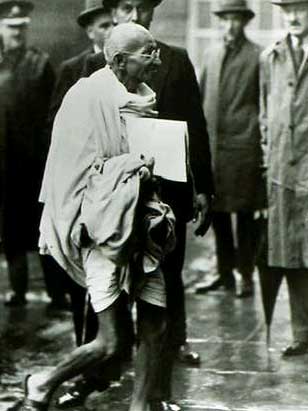 Mahatma Gandhi was born in India in the second half of the nineteenth century, graduating as a lawyer in England and late went to South Africa, where spent twenty years fighting racial discrimination and segregation civil Indians who had migrated there as workers. As used methods of passive resistance struggle against the arbitrariness of political power and boycott, later perfected in India. Returned home in the second decade of the twentieth century, and from this date until his assassination in 1948 led the Congress Party of India and peaceful resistance and struggle for human rights, which gave independence to India after the Second World War.
 Based on Gandhi, Martin Luther King Jr. against racial discrimination and civil rights of American blacks. Born in 1929 in the racist South, became pastor of the Baptist Church, and received the Nobel Peace Prize in 1968. Today, January 15, date of birth, is a national holiday in the U.S., civil rights are respected by law, and he is one of the great patriots of their country.
 Both heroes and martyrs fought for rights that are now recognized in the Universal Declaration of Human Rights. Their struggle was long term, and was crowned with success. The rule of law English and American made gradually be fair to impose their ideas. In 1957, President Eisenhower, was ordered racial integration in schools in the U.S. South. Then he did the same in buses, bars and shops. Today civil rights are respected and are part of American law.
 The question now would be to see the peaceful resistance in countries with totalitarian governments, where there is no rule of law and human rights are systematically violated, killed and is condemned for defending these rights universally accepted. In totalitarian states, the struggle is more difficult than in the India of Gandhi or the United States of Martin Luther King Jr. The people, without any legal support of a grip, if you choose to emigrate, can-massively, the struggle for civil rights and equality are facing an absolute rule, where there is no free press or independent work of the totalitarian state that encompasses everything. NGOs are not allowed to defend the interests of the exploited and excluded, there is no independent newspapers to denounce. Everything has to be with the State, nothing against him. The words of the Leader (all totalitarian state is caudillo) are law, and published and disseminated ad nauseam.
seems that all doors are closed, but it is not. The story has two recent examples of totalitarian states now free: Spain after 1975, and the Soviet Union after 1985.
Freedom is like air, when needed we will drown, but when we do not value. During the term of the Constitution of 40, foreigners visiting Cuba congratulated us and advised us to look our freedom, which was unknown, especially in Europe, but not care and will spend what everyone knows.
How long can we withstand totalitarianism! What to do? Peaceful struggle is long and painful. Is made for stoic and slaughtered. So were Gandhi and King. Cubans count on international solidarity, especially in the countries of Eastern Europe that were freed from the communist plague. They know perfectly well what is the "worker's paradise", and many countries (about twenty-five). There are also other countries of the world democratic majority. There are few totalitarian countries in the world, and even many steps are taken and developed thanks to a market economy, while the policy is totalitarian, it is a contradiction that sooner or later be solved by democracy. In this situation, independent journalists play a lead role reporting and teaching.
Solidarity also has to be internal, there is no preparation for democracy if there is no solidarity among the groups fighting totalitarianism. We must distinguish between tactics and strategy. The tactics may be different, and must be tolerated and supported by various opponents, the strategy remains the same: the democratization of the country. It is absurd division opponents for opinions tactics, this only does a disservice to the government reaction.
Both Gandhi and King used the boycott, which gave very good results: no goods were bought or used the reactionary government, not working for the operator. This is very difficult to do in totalitarian countries where everything is government-goods, labor, transportation, housing, land and so on, "but not impossible, as there is a small private sector to sell cheaper than the totalitarian state gives better services. But we must be stoic to forgo the goodies they sell the malls.
Finally, in the nonviolent struggle for human rights must be sacrificed. I remember that Gandhi was a vegetarian and family produced what it consumed. In Cuba it is not easy, but you can take steps to try to reduce the dependence we have omnipotent and omnipresent state. Both leaders
Pacific was the love between men as a guide. We have a Christian background who believes in love. Marti distinguished men among those who loved and created, and those who hated and destroyed. Let those who love and believe, avoid unnecessary hatred and pointless discussions. We have to win freedom, this takes pains and troubles, but the goal is noble and good. Gandhi and King are in the history of mankind. Their struggle is an example, but can not be applied dogmatically, as the world changes, expanding communications and human rights are known even by those who violate them.
The Universal Declaration of Human Rights must be known well by all Cubans, and required as a foundation of law and subsidiary legislation in any legal situation. This Declaration should be appendix to the Cuban constitution, it establishes the minimum rights of mankind.
* Manuel Fernández Rocha: Graduated from the University of Havana in racing history and law. Among the lawyers Agramontista living in Cuba is one of the oldest. He is founder and Chairman of the Forum for Historical Studies, and this condition has been attached to various projects opponents, such as Concilio Cubano, the Varela Project, the Initiative for the Fatherland for All and the Assembly to Promote Civil Society. Reside in Havana.


0 comments:
Post a Comment