Friday, September 7, 2007

P.i.d More Condition_symptoms

BOLETÍN N° 6 de la CORRIENTE AGRAMONTISTA DE ABOGADOS INDEPENTIENTES

Readers:

The current Agramontista (group of independent lawyers Cuban) is pleased to once again present to you, Dear Reader, another issue of its newsletter, the sixth-, which, as usual, we invite you to discuss, disclose and reproduce.

Although from the very beginning of their movement was made clear that the possibilities of our group were extremely limited, so we could not make a commitment to publish-specified intervals, the fact is that the cultural politics from time previous delivery has far exceeded what we had in mind when launching this initiative. Several years have passed since our number 5, but I must say that this is due to two factors Deals:

First was the General Meeting of the Assembly to Promote Civil Society, the thickest of the opposition coalitions in our country, it belongs to our current, "the conclave was held in what was the yard of the residence Professor Felix Antonio Bonne Carcasses, in Reparto Rio Verde, municipality of Boyeros, in May 2005, but their preparation, given its size and organization-required a hard preparatory work for many months (in particular, by members Executive, which is part of our President). Second, a few weeks after that historic first Congress of Democrats Cubans came to the arbitrary imprisonment of a group of activists from the Assembly, including the President of our current ", following a demonstration that was held, despite the latter circumstance, the unjust imprisonment of those compatriots continued - without charge and without trial for over a year and a half ...

Despite the difficulties faced, which itself has never been discussed is the provision of lawyers who make up the current Agramontista to continue editing the newsletter, you have - among others, the merit of being the first independent publication was born in Cuba after the crackdown of the 2003 crackdown.

A positive note is that we must grant our President of the prestigious International Award for Human Rights Ludovic Trarieux, which together provide various legal institutions of the Old World countries (France, Belgium, Italy, Germany, Poland, United Kingdom etc.). As a colleague has expressed himself Gómez Manzano, the award is not only him but all lawyers Agramonte.

By publishing this number 6, our country remains under an interim government that lasts more than a year have been announced "structural reforms", but these do not occur, nor is it known for sure of what that. Meanwhile, continue to languish in the various "islands" of the archipelago DGP, hundreds of political prisoners. We noted that one of them, a member of our current Pozada Rolando Jiménez, imprisoned on the Isle of Pines in April 2003 and is subject to a kind of trial in which, as unfortunately become customary in the case of jurists accused of political crimes "was not allowed to use the right-that formally recognizes the current law-to defend himself.

response, the current repeats its request Agramontista solidarity with all political prisoners of our country, and strongly increase their demand: Freedom Pozada Rolando Jimenez and the other Cubans imprisoned for their ideas!


Havana, August 2007

Beach Curtains -shower

EL EJERCICIO DE LA ABOGACÍA:VOCACIÓN, PROFESIÓN, FRUSTRACIÓN

Register for Vicente Casas *

some time ago, due to meet by legal proceedings in the Municipal Housing, addressed to me a lady accompanied by two other persons, who, knowing my status as a lawyer, asked me to represent them for the settlement of a legal issue to which I replied that would be a pleasure for me, but I am not allowed by the government to act on behalf of other persons who are not close relatives. With great detail gave a broad explanation of the circumstances, the details of your problem, I was aware and interested in the matter, yet frustrated because they can not do anything for a needy person requesting my help. I had no choice but to give brief advice and guidance to people overwhelmed so that they went to the Firm Collective City, which recommended some known and experienced colleagues for a possible solution to your problem.

This type of situation occurs frequently, which is food for thought and comment. So far, none of the persons to whom I explained why I can not play in matters unrelated to my interests or my immediate family (spouse and relatives within the fourth degree of consanguinity and second degree) or those who know me and know how did the studies in law degree (by distance learning system, working and studying) includes much you explain, why not allow a lawyer who is familiar with the population as graduates Law-making use of their knowledge in the exercise of their profession in favor of another natural person who needs and wants.

In Cuba, to answer this question with fundamentals y a otras tantas que se presentan cada día sobre el tema, resulta una tarea difícil, sobre todo por ser un país donde por regla general la lógica no es norma de aplicación en las relaciones de convivencia; para esclarecer mis dudas y poder dar mejor explicación, me interesé en el tema y busqué el concepto idiomático de abogado.

Según el Diccionario de la Real Academia Española de la Lengua, abogado es el perito en derecho positivo que se dedica a defender en juicio los derechos de los litigantes. (Derecho positivo es el derecho que tiene su expresión en las leyes vigentes en un país en un momento determinado.)

Aclarado el concepto, continué en la búsqueda de respuestas.

After talking with several colleagues based in the National Organization of Collective Law Offices (ONBC), I turn to the rule regulating the practice of law in Cuba: Decree-Law No. 81 of 1984, which states in article l that "the practice of law consists of consultations, to represent and defend the interests of a natural or legal person before the courts, arbitration boards and administrative agencies in the country and also to the organs, agencies foreign or international organizations. " Defined as only those lawyers lawyers belonging to the National Organization of Collective Law and which, in exceptional cases, be restricted to in Article 4 of the text and normally pursue their profession in other workplaces.

supported not find a reason for this limitation of the profession, if all that is extraordinary this article, and, consequently, the Decree-Law-is standing properly interpreted the concept of attorney, making a clear distinction between a and other lawyers, limiting or monopolizing the representation of natural persons in the exercise of the profession and controlling the justice questioned the long end, attached to the policy of the ruling class by the lack of division of powers, everything else is common to all legal practitioners in the conduct of business.

Article 2 of the regulatory text provides that "the practice of law is free," the lawyer "is independent and should only obey the law" played quite simply, is a logical and fair argument, but the supposed independence of the attorney applies only to regulations in the previous article-that is, members of the ONBC-, and therefore it is an act of discrimination and control: discriminatory, because it excludes all other professionals who are not "admitted" can not or do not wish to belong National Organization of Collective Law; of control, because through ONBC are controlled all the jurists who directly participate as advocates when it comes to "deliver justice 'in this system of government.

Article 3 regulates the requirements for practice as a lawyer, the first of which is "to be trained by Degree awarded by higher education institution concerned, which is logical and there is nothing new. Known-especially by more experienced professionals, which until the mid-seventies, the mere fact of being empowered by certifying title and registration the Ministry of Justice gave the possibility to practice law in the country, which changed-and not for good, "first with a new re-registration in the Register of Attorneys controlled by the government, which had the effect of the purge of many lawyers "unreliable" active, and later with the creation of so-called National Organization of Collective Law.

The second and most significant of the requirements is to "be supported by the National Organization of Collective Law."

This requirement is for the creation of this new controller and controlled "independent" National Organization of Collective Law, which determines who may or may not practice law and, consequently, get a better financial reward within the legal profession, with better conditions of work and attention to the lawyer that distinguishes it from the rest of the professional class. It states that ONBC is "independent." (This does not believe anyone in Cuba, we need only ask what party they belong to members of the National Board call for the organization and to whom they are accountable for their work during the term. According to regulate within its own constitutional sphere - Article 5 -, "the Communist Party of Cuba is the highest leading force of society and the state. " It goes without saying that the ruling party for more than 40 years and the only legally permitted in Cuba is also well known to all practitioners and for much of the population in Cuba is forbidden to create any type of organization that is not controlled by the government.)

Therefore, the watchword to practice law in my own country is "admitted" that is, belong to an organization to which access is restricted to the extreme , and the candidates for admission must have other conditions, some of which appear formally expressed in the article 7 of Decree-Law No. 197 of 1999, among which stands out subsection d), which requires "social prestige and recognition." That is, stay tuned to the rule of Castro's ideology.

Parallel to all these requirements should be the real possibility of employment in a particular firm and the essential recommendation or endorsement by the Director of the unit or office, at all which is added a preliminary examination on the knowledge and mastery of the Rules Procedures in the Organization, which, to my knowledge, not studied at university and only be known if someone within the organization to obtain assistance.

A similar-but-true acceptable practice of the profession in the courts of Justice and the Attorney General's Office, as well as in those other units of state and government with special characteristics, which requires the ongoing work of a graduate in law, so that because of this situation and the absolute control of the employment by the government as sole owner and master of the basic means of production, many professionals are forced to serve in the economy of the state enterprise as legal affairs specialists, subordinate to the chief or director the entity that knows nothing of the activity and upon which their employment, economic evaluation and pay-pay limited to a paltry monthly salary in local currency, "without care, professional training and poor working conditions, making complaints and resolving issues worth thousands of dollars without receiving a penny in return, assessed on the results of their work the same standard as either a technician, which requires a change of workplace constantly looking for the slightest attention to the man.

This discriminatory situation in the occupation of the specialized class on the right shows a flagrant violation of the provisions in Article 45 of the Constitution of the Republic of Cuba with regard to that under text, the work in this society provides the basis, inter alia, "the choice of the worker and his skills and ability" and "is remunerated according to their quality and quantity." In the same way, violate the fundamental principles governing the Cuban Labor Law, specifically those covered in Article 3, paragraphs e) and ch) of Act No. 49 of 1984 (Labour Code), regarding the choice of worker, his skills and ability to provide work and pay equal wages for equal work.

This discriminatory situation is compounded by the politicized nature of our judicial system, which has the effect of lengthy proceedings in the courts and unfair judgments that directly affect and shame experienced professional who acts doing a good job and knows it has no choice but to accept and endure the frustration of their efforts.

is very difficult for a citizen with a vocation to the right, unable to exercise fully according to his ability and effort, which to me is a real frustration. I regret that the government does not allow the formation of independent lawyers' associations, composed of graduates can not be studying the state and by those with years of service paid his debt to the government. I am sure that the Bar Association of Current Agramontista, chaired by the experienced colleague René Gómez Manzano, would be a pleasure.
clarify that the remaining items regulator Decree-Law No. 81 of 1984 are "generally" performance standards "autonomous" National Organization of Collective Law, which may be cause for comment in later works, as in our claim it is closely related to the title of this simple but sincere writing, discuss the entire Decree-Law No. 81 of 1984 would be a big task and unproductive

* * Vicente Register Casas (The Havana, 1958): Self-taught. Technician Graduate in Law (1992) and Bachelor of Laws (University of Havana, 1998). Specialist in Housing. He has worked as such in municipal departments of the Cuban capital. He has served as consultant and legal adviser. Current member Agramontista. Reside in Havana.

Giant Human Testicals

LIBERTAD SINDICAL, PROTECCIÓN DEL SALARIO Y DERECHO A LA HUELGA

by Maybell Padilla Pérez *

Freedom

The Preamble to the Constitution, includes the recognition of the principle of freedom of association as a prerequisite for peace and harmony universal. In Philadelphia, proclaimed in 1944, states that freedom of expression and association are essential to sustained progress.

Since the inception of the ILO, freedom of association is one of the fundamental values \u200b\u200bof that organization, underscoring the need to adopt measures to delineate the precise content of that concept, and to state its content in a formal instrument, with the aim of promoting and monitoring their scope.

As a principle in the Constitution and its Member States, constitutes an international obligation of the same. Although a nation not to ratify the Conventions sobre libertad sindical, tiene la obligación de cumplir y aplicar las directrices que les son consustanciales.

La Resolución sobre los Derechos Sindicales y su Relación con las Libertades Civiles, de 1970, hizo hincapié en que las libertades se definen en la Declaración Universal de Derechos Humanos y en que ellas son esenciales para el ejercicio normal de los derechos sindicales; es decir, la libertad sindical es inseparable del derecho a la libertad y a la seguridad de la persona y a la protección contra la detención y la prisión arbitraria.

Los instrumentos jurídicos básicos sobre la libertad sindical están contenidos en los convenios números 87 (sobre la Libertad Sindical y la Protección the Right to Organise), 1948, and 98 (on the Right to Organise and Collective Bargaining), 1949. They aim to promote and guarantee the fundamental labor rights within the broader field of economic, social and cultural rights.

The principles contained in these agreements do not assume a uniform pattern of union organization, but constitute the pattern should be judged according to which freedom of a union movement, whatever its form of organization.

two instruments complement each other: As the Number 87 concerns the free exercise of the right to organize, in conjunction fundamental to the rule, 98, on the one hand, essentially protects workers and their organizations against acts of discrimination and interference by employers and governments, and secondly, it encourages and promotes collective bargaining.

Wage Protection

In 1944, the International Labour Confederation met in Philadelphia. This time it was submitted a report containing the draft of the Declaration of Philadelphia, which became the Organization suggestions for future agenda. Among other things, noted that wage policy was at the center of the ILO, but until then, had been taken three sets of international standards on the subject. In that report it was stated that:

In many countries, especially in rural areas, would also be useful an agreement or recommendation on methods of payment of wages to establish the rules for payment at regular intervals conditions would be subject to discounts and advances of wages, prohibition of requiring workers to buy goods with their wages offered by the employer, the criteria applicable to partial payments in kind, protection of wages in legal proceedings and similar issues.

The obligation to set wages minimum was established for the first time in 1928 by Convention No. 26 and Recommendation No. 30, applied to industry and commerce. Later, in 1949, appears the Convention No. 95, supplemented by Recommendation No. 85 of that year. The Convention, which is of general application, should serve to protect workers from unfair procedures, which may place them under the jurisdiction of the employer, and also to ensure that wages are paid in full and without delay.

In 1951, the International Labour Conference adopted the Convention for agriculture No. 99 and Recommendation No. 89, which imposed the obligation to establish or maintain operation- methods for establishing minimum wage rates, in collaboration with representatives of employers and workers concerned. They also provide a system of control and sanctions.

The latest regulations on the pot are contained in Convention No. 131 and Recommendation No. 135 of 1970, which take into account the needs of developing countries. Foresee the need to establish a minimum wage apply to employees whose employment conditions would be appropriate application of that system. Also, indicate the elements to take into account in determining the level of wages and provide for the periodic adjustment of the level. It should be mentioned Convention No. 173 of 1992 on the protection of the claims in the event of employer insolvency.

Right to Strike

The right to strike is explicitly recognized labor rights in Article 8, paragraph 4, of the International Covenant on Economic, Social and Cultural Rights (ICESCR) and the Protocol of San Salvador, American System instrument which came into force in December 2000. Also in the ILO Report III (Part 4B), International Labour Conference (81 th Session, 1994) on Freedom of Association and Collective Bargaining (Chapter V: The right to strike, pages 65 to 83, Geneva, 1994).
Although this right is not expressly recognized in the Convention No. 87 of 1948 (on Freedom of Association and Protection of the Right to Organise), or any other agreement related to trade union rights, CFA Governing Council of the Poit has considered establishing basic rights of workers and their organizations in defending their occupational interests. The Committee of Experts has linked the right to recognize workers' organizations and employers to organize their activities and formulate their programs in order to promote and defend the interests of its members (Articles 3, 8 and 10 of Convention No. 87), with the need for means of action to enable them to exert pressure to achieve their demands. Accordingly, the Commission has taken the view that the ordinary meaning of the term "action program" includes the right to strike

* Maybell Padilla Pérez: Guantanamera. She graduated from the Universidad de Oriente a BA in History (1973) and Law (1978). She was a professor of law faculties of universities in East and Havana. Specialist in Labor Law. Worked as such in Cuban Fishing Fleet. Former member of the current Agramontista. He is currently Director of the Bureau of Labor Independent Legal Advice (Bajilan) and Deputy Secretary General of Council of Cuban Workers (CUTC).

Bell's Palsy More Condition_symptoms

LA DEMOCRACIA EN CUBA

by Manuel Fernández Rocha

* Democracy is an exception in humanity. Born in Greece 2500 years ago, some city-states like Athens. Then he gave the Roman Republic and in some Italian cities of the Middle Ages, as Florence.

In modern times there were democratic revolutions in the Netherlands in the Age XVI y en Inglaterra en el XVII. De allí pasó a Estados Unidos e Hispanoamérica en los siglos XVIII y XIX.

Por democracia entendemos el gobierno donde el pueblo tiene participación mediante el voto libre y la pluralidad de opiniones dada a través de diferentes partidos políticos. Por estos principios los cubanos lucharon durante el Siglo XIX, XX y hasta la actualidad. Los mambises luchaban con la consigna Patria y Libertad, tanto por la libertad de la colonia española como por la libertad del hombre, que es un presupuesto de la democracia, pues sin aquélla no existe ésta.

El 20 de mayo de 1902 nace en Cuba la República democrática, pero no todos los gobiernos fueron completamente democráticos. The Don Tomás Estrada Palma, José Miguel Gomez and Alfredo Zayas were individual freedom and political democracy, but in general governments Mario Garcia-Menocal and Gerardo Machado had varying degrees of authoritarianism. After the Revolution of 33 and with the Constitution of 1940 there were three democratic governments: Batista, Grau and Prio.

governments of Grau and Prio authentic greatly respected personal liberty and political democracy. The defect of all governments of the Republic, except for Estrada Palma was the administrative corruption.

On March 10, 1952, former president Batista, supported by the Army, which was generally gives a coup. From that moment a great crisis of democracy in Cuba. The coup found a weak democracy and consolidated. He started a popular student struggle against the dictatorship, which was armed and ended with Batista fled on January 1959 and the triumph of various insurgent movements, which was capitalized by the 26 July, in the figure of Fidel formed Castro government until today. As we see democracy in Cuba has had little life.

Humanity has had more freedom and democracy despotism. Despots have ruled for millennia and has been for a few centuries that democratic government is extended in this world. Is unquestionably the best form of government, but it is difficult to achieve fully. It is anti-authoritarian and anti-totalitarian, but it requires men to participate in government and in different parties consciously. Public way, but some men prefer being subjects to obey orders and not think about governing.

countries In English culture of democracy has taken root, in others less so, while there are regions where despotism reigns. There are international organizations like the UN to promote democracy. The Universal Declaration of Human Rights is an example of this, but some countries do not comply within its borders, saying its sovereignty, although the UN formally accepted.

totalitarian countries are now going back to the despotism of other millennia, Cuba is among them. Cuban is not free as an individual or political democracy. Unable to attach, you can not post anywhere if the government disagrees, it can not freely move house (there are countless laws and provisions permitting). The government must authorize him to travel abroad and foreign exchange charges for that. And others that would make this relationship ending. You can not study freely, if you disagree, loses his job and freedom (to survive). In general, it is an entity dependent for all of government is highly centralized, one-party and one leader (the Maximum Leader.)

What remains of democratic rights to a Cuban citizen? Dogmatic education receives government to limit university-it is for pro-government, and poor medical care until he dies. Good education and health care is in schools and hospitals to the new ruling class.

of freedom has gone. There is no division of powers. The courts comply with what the government tells them. Thus, a subject may be interned in prison for years without having committed the crime, or it may be months or years awaiting trial and then, without holding, being sent home without explanation or compensation.

The right of peaceful association of every citizen in a democracy, the subject is totally totalitarian. You can not associate freely in cultural associations, labor, sports and much less political. There is only the Communist Party of Cuba and the Union of Young Communists, who are quarrying for government officials and the state. Since we came here to be distinguished from State Government: The State is what remains, the representative of Cuba on the flag, coat of arms and anthem. The government is the government, different time and perishable. Governments change, the state remains. This usually occurs, but in Cuba, state government and party is the same thing does not change.

Many people move if they can, others survive as they can. Officials live well and the people live poorly. Those who disagree with this state of affairs, do very evil. They lost their jobs, imprisoned, government mobs attacked and repudiated. There is what Benito Juárez considered fundamental: that "respect the rights of others is peace both between individuals and between states."

The Argentine psychiatrist José Ingenieros wrote in the early twentieth century Simulation in the Struggle for Life. This writer was very influential in the first half of the twentieth century, and now the Cubans who do not know because it is published or spoken of, is in compliance with government simulation and how to survive and not for trouble. Engineers was established that greatly influenced socialist and Mella and other leftists of his day, but as he says, destroy the personality simulation, hence the unusual number of suicides and mental illnesses in Cuba. People pass through the streets talking to themselves, and when talking to someone, what they say scares. We are a sick people need freedom and democracy.

freedom and democracy is like the air we breathe: when we do not value them, and when we lose, we die. The Cuban people are surviving, not living. Survive as you can. The intellectual life is worse because there are realize what they have to do to keep the little work that supports his family and suffering from deep existential angst. They can not agree to participate in acts of repudiation of peaceful people, but some do it for fear and weakness. Why not consider and speak little and carefully. Fear is not the personality or how citizens. It is the great contradiction of the Cuban government must suppress to rule, but the government is formed with simulators that at any time will show its interior, and pass what happened in the USSR and other socialist countries are in favor of the change.

simulate or not all abide by despotism. The few who disagree, call them what they call themselves: opponents or Democrats are driven from their jobs and punished for many years. In the worst case, sentenced to death. In the 1940 Constitution was abolished by the Constituent Assembly who were elected to the best of Cuba and multi-party, which is common today in the world. It was revived in 1959 until today. The countries of the European Union and most countries in the world is abolitionist. Only few, mostly totalitarian death-penalty persists. U.S. there are states that have, as Texas, while others are abolitionists, such as California. In criminology has shown that the death penalty does not prevent crime, they have a social origin and prophylaxis which prevents society.

Small groups of Cuban democrats living in terrible conditions, prisoners who are harassed are not recorded, beaten and insulted constantly. Quick action groups may prevent the government out of your house (a kind of house arrest.)

What rights do the Cubans? They can not protest the government's decisions or express his thought. Prisoners are referred to their home for a furlough, which is a kind of house arrest, when they are very sick or there is an outcry in the world. The latest political amnesty was in May 1955; It freed on the Moncada. There has been no pardons. It can be repealed parole and imprison people again. The government is omnipotent.

Emigration, which is great, helps those who were left with money and moral support. Denounce oppression and tell the world what is happening and it is not about censorship. Independent journalists, persecuted and imprisoned, help to know something of what happens in Cuba, as there is a total censorship.

democratic groups are infiltrated by the government, he learns of any meeting and sabotage. Solidarity must be strengthened, as the fundamental principles (individual freedom, political democracy and the release of prisoners) are common, but not always this solidarity rationale is given. There have been cases of obstruction between the groups, and this benefits only the government, which promotes these divisions. If we are all repressed, we must all show solidarity and to exclude any kind of sectarianism. The world is watching us. We are few and powerless of the great Leviathan that oppresses us.

The Constitution of 1976 that made a government commission, does not support freedom of the individual. A few items taken from the 1940 Constitution are not met. In the section on rights and duties of the Constitution is an article that states that none of those rights may be used against the people's desire Cuba to build socialism. A few years ago an amendment was added which can not change anything in the Constitution of 1976, although there is an article (the 137) that indicates how to modify it. The right is void in Cuba today, and all the people, and lawyers in particular, is a farce.

When they resorted to Article 88, paragraph g), and collected 10.000 signatures to be made with a bill for a referendum, was not released, and soon after many activists were jailed and were collected twice than 10,000 signatures. Habeas corpus, which was in the 1940 Constitution, is now in the Criminal Procedure Act and not fulfilled, there are many cases (even lawyers) who have completed months and years without celebrárseles trial. Lawyers who can exercise must belong to the association of jurists, who are expelled or given no input. Decree-Law 81, which regulates the rights of lawyers is not met. We are simply in a state of helplessness.

* Manuel Fernández Rocha: Graduated from the University of Havana in racing history and law. Among the lawyers Agramontista living in Cuba is one of the oldest. He is founder and Chairman of the Forum for Historical Studies, and in this condition has acceded to various projects opponents, such as Concilio Cubano, the Varela Project, the Initiative for the Fatherland for All and the Assembly to Promote Civil Society. Reside in Havana.

Eagle's Syndrome More Condition_symptoms

JUSTICIA

by Lazaro Gonzalez Giraldo Godinez *

the term justice must be understood as the constant and perpetual will to give everyone what belongs to everyone. This very general idea, which comes as a concept since the dawn of humanity, are expressed in two types of justice recognized: the commutative-reflection of the principle of reciprocity, which requires consideration be given in as much of what has been received as a benefit, proportionate, and the distributive broader concept that refers to solidarity with the weakest of society, whose purpose will seek some redistribution of burdens and benefits, according to their needs in order to alleviate and eliminate the inequalities that are independent of the merits and personal effort or social contribution.
These ideas acquire specific expression in positive law, first through national constitutions that recognize the value of justice as the foundation of law, with freedom, equality, dignity and political pluralism. It says this order since the last four values \u200b\u200bare manifest expressions of justice.
However, it is possible to enjoy these values \u200b\u200bwithout providing the means for the full development of individual personality, family and society. To that end, typically the constitutions recognize as ordinary property, and with her other limited real rights, provided they fulfill a social function, defined as a happy combination of individual and collective interests, so that a balance can be generated a progressive evolution of the quality of life, translates into a right to work, to decent housing, to the enjoyment of the environment, culture, education and sports, among others. What
-of course-hand leads inexorably to clarify that when we talk about happy combination of the individual to the collective interest, not in any way we talk about heinous individualism at all costs or all costs, as a means to achieve the ends better society, forced collectivism nor preached by totalitarian states, which enervate the initiative of people and make them cowardly automatons at the service of society, which all have to thank and why they have to compromise on sake of future generations that never arrive and they always prove that: fantasies of childish dreams tyrannical.
to Cuba, our beloved country, are not desirable neither one nor the other, because we have had enough of both, is up to us-and I stress: a Cuban-we choose the route and no adequate means to experiment with the pain of others, but to mitigate human suffering, eliminate it entirely, give the person the possibility of developing in harmony with others and with the environment, in such a way that private initiative is one of the engines that drive social development; I say one, because also perform intermediate organizations and the state itself play a role in the development of our society, in everything that is vital for disadvantaged or where the initiative Private not interested in dealing, but equally of interest to the community.
This is perfectly achievable, does not require large resources and leads to the end of time. We must not fear change, they require only the political will of those who govern us and the conviction that Cubans deserve a much better future than the present oppressive and stifles stifles us, we have to because it's our future that is at stake and decisions of this nature are postponed, delegated and essential. Get anyone you can give: The freedom to act with justice and dignity

* Lazarus Giraldo Godinez González (Guane, province of Pinar del Rio, 1964): Graduate Degree in Law at the University of Havana (1988). Current member Agramontista. Practiced law in lawyers' Vueltabajo the capital for years, until his unjust expulsion following a judicial hoax. Earlier, another similar attempt to ban arbitrary practice led to the submission to the National Organization of Collective Law in a supporting document Agramontista Stream, signed by dozens of lawyers in business. Lately he has served as Legal Adviser to the Civic Consulting Center for Civic and Religious Pinar River. Resides in the city of Pinar del Río.

Liver Disease More Condition_symptoms Ulcerative

ESTADO PELIGROSO

by Juan Carlos González Leiva *

Before writing these notes I was afraid of not knowing how to explain, but the imprisonment of thousands of young people my country filled me with courage to say that thousands of girls and boys are detained without having committed crimes.

In Cuba, the dangerous state is "the special proclivity that is a person to commit crimes demonstrated by conduct that is contrary manifested by the rules of socialist morality. " This atypical includes habitual drunkenness, dipsomania, drug addiction and antisocial behavior.

organs of State Security and National Police applied more regularly subsection c) of paragraph one of Article 73 of the Penal Code (the "antisocial behavior"). Naturally, we can not get here in legal treatises, because I lost in a sea theorist who would blind the minds of readers and negate the intent to reveal the practical result of the implementation of this regulation in our country.

In one of its parts, unlawful rule stripe in ductility, making it an uncertain bag that allows law enforcement agencies indiscriminately imprisoned, this is the most straightforward denial of the crime as a criminal behavior and theory. The above regulation states: "other provocative acts."

should be noted, first and foremost, that Marxism-Leninism sees any law as a political measure, and the law as a tool for those in power. The Dangerous State is essentially an instrument of political repression by the Cuban government and an attempt to take their acts of domination with particles of legal formalism. This is clearly demonstrated when a dissident is jailed for conduct peaceful supposedly dangerous to society, and in no case shall apply this law or any who star in the violent acts of repudiation and public disorder flagrant break down the doors of homes of independent journalists and activists penetrate into them, practice records, beat their inhabitants and take their property.

In recent months, the dangerous state has become the most popular method used by the Cuban government to imprison independent journalists and human rights activists. Anyone can answer the following questions: Who (or whom) they were a danger for journalists independent imprisoned on this behavior? What social damage means the act of Raymundo Perdigon Brito founded the Independent Press Agency Yayabo Press, for which he was sentenced to four years imprisonment in a summary way in the Popular Municipal Tribunal in Sancti Spiritus, who sent him to the horrific prison Nieves Morejon? Why was jailed independent journalist Oscar Sanchez Madan José or why Ramón Velásquez Toranzo becomes a danger by walking alone along the central highway of his wife and daughter, and had to be sentenced to three years in prison, which extinguishes in a labor camp? Among

the victims of this legal monstrosity are also independent librarians José Antonio Mola Porro and Eduardo González Vázquez, as well as human rights activists and Loyola Raúl Hernández Quiñones Roberto Velasco, all of the city of Camagüey. In addition, Yancy Ruiz Martínez, Osvaldo Ras de la Cruz, Hugo Blanco Prieto, Lazaro Rosales Rojas, Ernesto Rodríguez Hernández, José Antonio Martínez Gallardo, Emilio Santos Oviedo et al. The Cuban government also imprisoned María de los Ángeles Borrego Mir, the only woman listed as dangerous dissident.

peaceful dissidents are expelled from their centers work and harassed to the point of destroying their nervous system and family, and then taken to jail, accused of habitual vagrants and parasites of society.

Heads of sectors of the national police are the spearhead of this method of social repression, they make the official warnings and records predeclictiva social dangerousness, which in most cases are full of slanderous lies. They become a social scourge, a judge Inquisitor at its discretion determines who has become "dangerous." (Of course, I mean the case of the dangerous political not because they are unique to the State Security.)

I can not dejar de mencionar que el gobierno castiga la prostitución, conocida en Cuba como jineterismo, encarcelando a las muchachas bajo el Estado Peligroso, condenándolas hasta a cuatro años de privación de libertad en campamentos de trabajos forzados. En la generalidad de los casos, los juicios son sumarios y sin las más mínimas garantías procesales; el recientísimo enjuiciamiento del periodista independiente Oscar Sánchez Madan deja muy claro este actuar: fue arrestado el viernes 13 de abril alrededor de las siete de la mañana, y condenado cuatro horas después, sin que mediara ninguna formalidad anterior y sin la participación de sus familiares ni amigos.

La amplia utilización que tiene hoy en Cuba State legal aberration Dangerous, I consider the law from a Marxist-Leninist, as Caribbean. It is true that in some countries the law has regulated the dangerous state and that the eminent Jiménez de Azua defended criminal social dangerousness. But I understand that society has no need to "protect" this rule undermines the entire criminal justice system and its institutions, and that destroys the individual, homeless, and turning against the society that establishes it.

The mentally ill, alcoholics, drug addicts and others, are requiring medical care facilities should not be regulated for criminal science, before remain as an obligation of the State in terms of health and public safety. It is an outright denial of the right to punish a patient unable to understand the scope of their actions, and a felony in a prison for aggravated his health and destroy criminal fashion.

Such is the contradiction of the State Hazardous to criminal science and human rights in general, at odds even with the "Socialist Constitution." Article 69 states: "No one can be tried or sentenced except by the competent court under laws preceding the commission of the offense and with the formalities and guarantees that they establish."

In my opinion, the crime is lurking in the minds and hearts of every human being, and every individual is prone to commit. Only God can know how much humans are coming up to carry out a criminal act.

What part of the path of crime advocates can locate dangerous state? What ideation, deliberation, decision or execution? If the social dangers no action or omission harmful and classified, what is the foundation of the security measure?


* Juan Carlos González Leiva: Avileño. Blind. From the day of his graduation as Bachelor of Laws (University of Havana, 1997) joined the current Agramontista. President of the Cuban Foundation for Human Rights and Executive Secretary of the Council of Human Rights Rapporteurs (both organizations based in Ciego de Avila). Is the only former political prisoner in the world blind. Lies in Ciego de Avila.

Lower Back Kidney Pain More Condition_symptoms

EMIGRACIÓN LEGAL, CONFISCACIÓN DE BIENESY PRESCRIPCIÓN DE DERECHOS

Costales by Leonardo Pita *

Pretender develop a conference on the legal institution of the event, its implications, consecuencias y todo lo que a su alrededor se origina en cualquier contexto socioeconómico y político, nación o régimen, no sería exactamente el propósito del presente trabajo.

¿Hasta dónde la emigración legal y la consecuente confiscación de bienes muebles e inmuebles de los cubanos pudiera considerarse un acto jurídico justo?

La emigración no es un acto lesivo ni antijurídico. ¿Por qué aplicar esta medida extrema de confiscar bienes muebles e inmuebles (y, dentro de estos últimos, la vivienda, bien de incuestionable valor material, sentimental y humano)? ¿Han prescrito los preceptos jurídicos constitucionales que refrendan garantías y dan protección citizens' rights for those who decide to immigrate legally?

This is the fundamental center which will focus on the theme that I intend to share, knowing it will be simple dimensions of what could be a whole thesis to develop in the light of an increasingly international context of human practices attached to protect and guarantee the rights given to the human person as the center and goal of every society. Discussing the topic is necessary to examine certain provisions of the current Cuban Constitution.

Article 21 of the Constitution states: "personal property is guaranteed income and savings from their own work on housing that has domain justly and other goods and objects that serve to satisfy the material and cultural needs of the person "(first paragraph).

seems that this article of the Constitution guarantees citizens the protection of the assets acquired from honest work and a fair and legal.

is important to go back to 1961 to remind those who know her, and present it to non-the ancient and more relevant than ever confiscatory law number 989 of December 5, published in the Official Gazette No. 237 of December 6 of that year. This law ordered the nationalization, through forfeiture in favor of the Cuban State, of all movable and immovable property or any other kind, rights, shares and securities of any person leaving the country permanently. Thus

so simple was stripped of his property and rights of Cuban citizens for the simple reason of making use of their legitimate right to emigrate to the country where they decide to establish temporary or permanent residence. It was the first time the world in its fullness watched with horror how the governance of a country institutionalized the plunder of the property of their countrymen who, for whatever reason, decided one day to leave their beloved homeland.

Well this is not past history, is as valid as the first day, despite lacerating the deepest feelings and create an anger that is aggravated by the lack of a popular forum where you can express loudly that we are removing the guarantees and rights are reflected in the constitution of this country, and are a dead letter.

Invoking Article 21 of the Constitution and what it says is to realize that this is a hypocrisy.

is a fact that on the nationals of that country to lose weight scarce goods acquired during a lifetime of sweat and tears has, houses that have been home to entire generations of families who feel an attachment, not what material, but rather sentimental.

I dare say that Cuba is the only country where their migration is punished with confiscation of goods of all kinds.

need not be a lawyer to know that the seizure occurs in response to an unlawful act, is the reaction of the Administration for breach of substantive law, which involve capital assets related to the agent comisor the offense in question or procured fraudulently or illegally.

Sasturain Mederos says Oriol, in his book Legal Vocabulary (1998): "Seizure is an action taken by the State through its organs, which is available as a sanction, through the procedures established by law. " The brief Political Dictionary published by Progress Publishers in 1983, designated as seizure that "coercive and seizure without compensation by the State of any property or your party. In the criminal law is an accessory penalty which the law imposes for crimes motivated by greed and more serious crimes. "

Where is the violation of the law of the person who decides to migrate through the channels established migration on the island?

Article 41 of the Constitution means that all citizens enjoy equal rights and are subject to equal duties, and does any specification with regard to those who emigrate. So why prescribe the rights and guarantees of those who decide to do it?

Article 60 of the Constitution is much clearer when he says that "the confiscation of property used only as a punishment by the authorities in the cases and procedures determined by law."

We agree that our migration is sanctioned, even if it does so peaceful, orderly and legal.

The Universal Declaration of Human Rights, Article 11 says that all people equally have the right to move freely by any country and live in the place we choose. And 12 states clearly that we are entitled to the protection of our privacy, family, home, correspondence, and to defend our honor.

To accentuate the situation, the General Housing Act undertook, in Article 81, to ensure that everyone-no one speaks of Cuban citizens lose their homes legally acquired by the fact emigrate permanently from the country; Decree-Law No. 233, July 2003, says: "The assets and rights of a person leaving the country are seized."

As we have seen, would be countless pages to describe this abuse of power, or as may be described, "to refer to pain experienced by the Cuban when evicted from what was always his home, even before leaving the country because he is applying the law, unreasonable and private asset stripping, to address what was one of the vaunted promises to give every Cuban decent housing.

What nation on the planet Earth will not respects private property acquired by means of legally admitted? It's really humiliating situation that Cuban immigrants have faced, now, incidentally, are perhaps one of the key revenue sources, in this increasingly impoverished economy. But you can not lose sight of the delivery of housing to people in need of them gives birth to hatred between there and here, as it has always been said by the official sectors if the company becomes current, will claimed the houses supplied by the Cuban government, this is the cause so that no project of democratic change refers to the subject, and if you do, try to make it clear that the decision will be respected by law to mention confiscatory. In my case I agree, but it will be necessary to compensate for the state, and in correspondence with the new legislation, the payment of fair value for these assets taken away without the slightest consideration and warranty.

is true that those who receive not their fault, it is the law, it is the law violates the most basic rights of citizens is a reflection of the hypocritical policy of security and public safety for the Cubans, is the patent and materialized apartheid policy for those who do not share the ideas established officially by the socio-political system established on the island for nearly half a century.

is an unfair punishment that does not share the idea, even if they are minorities, the right of citizens is respected, the law and guarantee of the assets acquired legitimately for years of sacrifice, sweat and tears, must be protected, the other would be to consider criminal action peacefully dispossession of legislation that attacks growing against the interests of their nationals.

* Costales Leonardo Pita: Pinar del Rio. Bachelor of Laws (University of Pinar del Rio, l994). She has worked as General Counsel for several companies in the western province, now does it in the Railways. Advocate Agramonte. Lies in Pinar del Río.

Mt941 Swift File Format

¿COHERENCIA O JUSTICIA?


by John Escandell Ramirez *

The first session of the Cuban Parliament this year approved a report which calls for establishing a criminal justice system "more coherent, consistent with trends claiming social and political development of the country."

According to the parliamentarians, "punishment should be lower, without implying impunity or tolerance, or fail to condemn severely criminal conduct, by its severity and social damage so require."

I have the view that the problem of the criminal justice system of the island lies not in lack of consistency, but the lack of justice. Not having to punish is nothing better than less severe penalties.

more than 24 centuries ago Aristotle divided justice: commutative
· Justice, which is in force between people
· Justice legal, which the citizen owes the state, and
· Justice distributive, which should the state to citizens.

latter is that, unfortunately, does not make the Cuban government.

is precisely the "consistent" one of the main evils of the administration of criminal justice in Cuba, because he has broken the "contradiction", a basic principle of the trial which is the only reliable method to properly resolve the conflict and contradiction can not exist without an effective defense, which is only possible when you have an independent legal profession that the state recognizes this essential values. Both are conspicuous by their absence on the island

Are judges and prosecutors Cubans who have to stop being "consistent" with the policy of repression and disregard for the law to promote government authorities.

In my humble opinion these are the causes that make judges and prosecutors to leave the profession, but in fact this attitude is not consistent enough, it is necessary that the right technical enacting laws requiring truly democratic and also requiring the repeal of those who violate rights and freedoms recognized widely.

problems of criminal justice in Cuba are not resolved by the music of Silvio Rodriguez, such consideration, as it has passed the National Assembly, evidence of a divorce from reality and a supine ignorance of the living conditions of the prison population .

criminal justice not be solved by improving the working conditions of judges and prosecutors, as Mr. Raul Castro oriented. The criminal justice system needs an independent judiciary, free exercise of the legal and constitutional recognition defending the city.

In fairness, the courts should cease to impose sanctions of imprisonment for the mere fact that a citizen does not profess the ideas of government and it does not work (because the state is the sole employer and does not employ his opponents ), as they have been doing so far under the legal institution of "pre-criminal dangerousness."

In fairness, the prosecution must cease to originate, and the courts impose cease-citizens who call for the exercise of universally recognized rights and freedoms.

To improve the quality of the trial, judges must respect the principle basic "equality of arms" for the parties to the dispute and stop favoring the prosecution, admitting evidence and rejecting their lawyers.

To put in tune with our time the criminal justice system, criminal law specialists should advocate for allegedly criminal behavior was decriminalized only restrict rights and freedoms, including, for example, contempt, Act 88, the propaganda enemy and other figures, stating that officials deemed defamed or insulted complaint to be like ordinary people, but not continue to penalize those who decry and criticize public functions, for censure and criticize Government management is not crime-not even a political one, "except in countries where the citizen has been shot.

To do justice and raising the quality level of the trial, the principle of publicity should be respected, because it is a procedural guarantee, a condition of legitimacy of public actions, and judges can not continue to allow Cuban secret trials because this is a case of corruption, to make unjust resolution as a result of disregard for basic security.

To achieve justice in time, it is necessary to comply with the procedural terms. (In the case of accused opponents of the regime, these terms are a trip to the antipodes. Examples include the cases of lawyer Rene Gomez Manzano, in custody without charges for more than 18 months, fortunately released today, "or that of another colleague, Rolando Jiménez Pozada, arrested in the spring of 2003 and secretly sanctioning without their presence, in December 2006 to twelve years imprisonment.)

The other extreme is the 75 Cubans who are in the spring of 2003 were sentenced to long terms in a few weeks and there were no exceptional circumstances, as well as required by the Act, for submission to the summary procedure (except that, to this date, U.S. government invaded Iraq and the world media focused on this news).

In strict law, I believe that the heads of the arbitrariness in the summary trials of 2003 are Ruben Remigio Ferro, president of the Supreme Court and Attorney General Juan Escalona Reguera (since the former must have agreed to the suggestions of the second to to take action under Article 479 of the Criminal Procedure Act, which is what regulates the above procedure.)

In my opinion, to improve the criminal justice system, judges, prosecutors and law ought to promote the enforcement of penalties, which established that the courts are those who choose the place of performance of the penalty, that way neither the police or other policy organs of the Ministry of Interior could blackmail the sanctioned sending hundreds of miles from his residence, inflicting additional punishment sanctioned themselves and their families .

other hand, I think also that teachers of Criminal Law and Criminal Procedure at this stage should show their discontent, and not continue to explain to their students precepts are violated without any consideration, keeping silence and shy away from criticism.

I agree to bring culture to those who administer justice, and it would be relevant judges and prosecutors read some titles such as the fertile prison, Mario Mencia, published by the Cuban government, in this book will see how the leader of an assault that caused dozens of deaths ate spaghetti with calamari and Italian chocolates, took a sip of coffee and smoked cigars H-Upmann, published in the magazine Bohemia their views, not only received visits from their families, kept clean the granite floor of his cell with soap and detergent creolina Lavasol-so I could give envy every room at the Hotel Nacional, "read the books requested, including Marx, Engels and Lenin, and was heard by the Lieutenant Montesinos when they received the books, requesting, stating that "when studying economic, social or philosophical, it must have the most books and authors varied criteria, analyze, compare, etc. In matters of religion, social and political doctrine, not conceived of the study without the freedom to read. "

ant Commander's cell during his 21 months and 15 days of his imprisonment for the death of tens of people do not speak, because those ants ate everything: bread, cheese, oil-although, curiously, no condensed-milk ingested, while ants today do not know these products, hence no comment.

After reading the aforementioned book I suggest you close your eyes and try to move to Kilo 7, Combined Eastern Agüica, Sea Green, Aguadores, Taco-Taco, sweet potatoes and other prisons more, and try to remember - among many other prisoners of conscience, Dr. Oscar Elias Biscet, independent journalists Hernández González, Ricardo González Alfonso, Adolfo Fernández Sainz, Juan Carlos Herrera Acosta and many others who were imprisoned for more than 48 months, more than double the Moncada, with the difference that did not cause any death or social harm, comparing the conditions in which they turn, their isolation, their food, their visitation, they can read books, cleaning their cells, if they can publish articles in the national press, if it preserves physical and moral integrity - and find that not only are unjustly punished but also unjustly banished hundreds of miles from their usual residence, if they really know the situation, they will feel angry and embarrassed. Beneficial

would also read the inaugural address of Ignacio Agramonte y Loynaz, which, for reasons of space, do not comment.

But very especially recommend the work of a famous Cuban lawyer, Mariano de Aramburo, which has much to do with the issue we address, here transcribe a paragraph from one of his books: "... Where the right sentiment wanes and wanes and dies, there will be no order or progress, because lack of justice, the mother of all civic virtues. The law is the body without a soul, is without substance, letter without the spirit, power, despotic oligarchy, stronghold of the boldness and body of every lust, the courts, servants submissive cravings, daring and venality of the government, citizens, connatural with injustice, bars without anger, gentle and cowardly brake shackle them. To become law, are neither necessary nor the secrets of his science or knowledge of the laws, it is necessary to study the race or engage in the study of codes, the right is a human sentiment which blooms in all beings of our species as there are other feelings that characterize and differentiate us in the concert of all creatures. "

Cuba, its people, in whose name justice is delivered," expected without delay, as the first act of justice, freedom for all prisoners of conscience, without any conditions.

I am convinced that these notes are not enough to make the system fairer criminal justice Cuban but are more suited to the tune "note" the singer-songwriter Silvio Rodriguez.


* Escandell Juan Ramirez: Habanero. Graduate engineer (1972) and Bachelor of Laws (University of Havana, 1985). Maritime International Law Professor at the Naval Academy (1985-90), Class Counsel Firm of San Antonio de los Baños (1990-98). It is one of the oldest members of the current Agramontista. He defended many political prisoners. In 1998 he had to go into exile. There has chaired the committee of lawyers formed in solidarity with colleagues imprisoned for their political views (René Gómez Manzano and Rolando Jiménez Pozada). He resides in Miami.

Graves Disease More Condition_symptoms Blood

FUNDAMENTOS DE DERECHO Y VIOLACIONES DE LOS ILO CONVENTIONS SIGNED BY CUBA

by Maybell Padilla Pérez

* Generally, we discussed the international conventions of the ILO, and we do away from the grounds which gave existence So this time, the board from a legal perspective, given in various international standards, where there are foreign conferences, conventions, protocols or agreements, among others, that support them. This interaction brings the consequence that, when breached an agreement which is a signatory to the State is concerned, This-in turn-breach signed papers form the basis of that convention. Consider the following:

Conventions Numbers:
29 (Forced Labour), 1930, and
105 (on the Abolition of Forced Labour), 1957.

Fundamentals of Law: Universal

• Declaration of Human Rights, adopted and proclaimed by General Assembly of the United Nations on December 10, 1948 (Articles 4 and 23.1).
• Declaration of the Rights and Duties of Man, adopted at the Ninth International Conference, 1948 (Art. XIV).
· International Covenant on Civil and Political Rights (ICCPR) adopted by the General Assembly of the United Nations on December 16, 1966 (Art. 8).
· International Covenant on Economic, Social and Cultural Rights (ICESCR), adopted by the General Assembly of the United Nations on December 16, 1966 (Art. 6).
• Protocol Additional to the American Convention on Human Rights in the Area of \u200b\u200bEconomic, Social and Cultural Rights (Protocol of San Salvador), signed by the OAS General Assembly in San Salvador, El Salvador, 17 November 1988 ( Section 6).
· Convention on the Elimination of Discrimination against Women, adopted and opened for signature, ratification and accession by General Assembly United Nations on 18 December 1979: Article 11, paragraph 1, paragraph a). Conventions

Numbers:
11 (on Freedom of Association-Agriculture-), 1921;
87 (on Freedom of Association and Protection of the Right to Organise
), 1948;
98 (on the Right to Organise and Collective Bargaining), 1949;
135 (on Workers 'Representatives), 1971;
141 (on the Rural Workers' Organizations), 1975;
151 (on Labour Relations in Public Administration), de1978 , and
154 (on Collective Bargaining), 1981.

Fundamentals of Law: Universal

• Declaration of Human Rights (Art. 20.1 and 23.4).
• Declaration of the Rights and Duties of Man (Article XXII).
· International Covenant on Civil and Political Rights (Art. 22.1, 2 and 3).
· International Covenant on Economic, Social and Cultural Rights: Article 8, paragraphs a) and d).
• Protocol Additional to the American Convention on Human Rights in the Area of \u200b\u200bEconomic, Social and Cultural Rights (Protocol of San Salvador): Article 8.
· Convention on the Elimination of Discrimination Against Women: Article 7-c). Conventions

Numbers:
100 (on Equal Remuneration), 1951 and
111 (on-Discrimination Employment and Occupation-), 1958.

Fundamentals of Law: Universal

• Declaration of Human Rights (Art. I, 2, 7 and 23.2).
• Declaration of the Rights and Duties of Man (Article II).
· International Covenant on Civil and Political Rights (Art. 26).
· International Covenant on Economic, Social and Cultural Rights: Article 3 and 7, headings i and ii.
• Protocol Additional to the American Convention on Human Rights in the Area of \u200b\u200bEconomic, Social and Cultural Rights (Protocol of San Salvador) Article 3 and 7, paragraphs a) and c).
· Convention on the Elimination of Discrimination Against Women: Article 11, subparagraphs 1, b), c) and d), 2, subsection a), and 15. Conventions

Numbers:
138 (Minimum Age), 1973, and
182 (Worst Forms of Child Labour), 1999.

Fundamentals of Law: Universal

• Declaration of Human Rights (Art. 25.2).
• Declaration of the Rights and Duties of Man (Article VII and XXXVII).
· International Covenant on Civil and Political Rights (Art. 24).
· International Covenant on Economic, Social and Cultural Rights (Art. 10.3).
• Protocol Additional to the American Convention on Human Rights in the Field of ESCR (Protocol of San Salvador): Article 7, paragraph f) and 16.

Convention No. 150 (on the Labour Administration), 1978.

Fundamentals of Law: Universal

• Declaration of Human Rights (Art. 8 and 10).
• Declaration of the Rights and Duties of Man (Article XVIII).


* * * If we make a brief analysis of the situation of human rights work, according to the known violations, can be summarized, among others, the following:

Do not allow the formation of independent unions. Maintain refusal of the State and the Cuban government to recognize and capture the growing legitimacy of the independent union movement.
Do not legalize or permit the strike or the lockout. Despite several agreements glimpse this right as a means for workers to obtain privileges that other ways would not be possible, the Cuban government strongly opposes the workers come to strikes and unemployment. This trend is extremely worrying, as the union spirit is lost, little by little, in the working class in these times. That is why the freshness of independent unions is critical, because the same maintain the democratic validity of the free countries of the world where the working class, united in trade unions, is a leader in the realization of the benefits of this important social sector,
· definitive Punish split or temporary transfer of jobs to those who exercise freely their right of speech, press, association or assembly.
· Violating current Health and Safety at Work, at tasks that require these resources, not to give to the workers.
· Contract Cuban workers in the case of joint investments or foreign capital, only through employment agencies controlled by the state, so young skilled workers are constrained to perform at such centers, which greatly reduces the options for them.
· systematically violate the Conventions and Recommendations of the International Labour Organization, especially the conventions numbers 87, 98 and 105, however they have been endorsed and ratified by the Cuban government. • Maintain
racial discrimination in areas where the currency is the dominant medium of exchange, mainly in tourism, where it is rare to find a black manager or occupying positions of responsibility. The same situation was observed with women in this sector, particularly if it is black.
· Discriminate, to hold certain positions or perform other, the incoming applicants, simply because they are young.
• Maintain the courses on to perform in-privileged sectors such as tourism-training centers of these entities. This brings the consequence that the young unemployed do not have the opportunity to join them and opt for these jobs. Courses of this nature enable various options for work in hotels and tourist facilities, which are the most commonly offered in the country, however, the same can not expect the mass of young people disengaged labor, because the personnel chosen for them is in a bag or should have links to a workplace of that nature.
· Forcing workers to submit a tip, or any part thereof, obtained by the good service.
° Obligations to employees who work on contracts of employment abroad (such as cruise ships, merchant ships and others) to pay a return ticket in foreign currency, for which they must devote part of their salary, this in addition to the party appropriates the Cuban State.
· Disrespect the right hierarchical scale in the stock nature centers connected to the previous vertical bar, a worker the same may be waiting a year or four or five to be called to work. At that time the employing entity claims the right to take it out of the bag, if you liked, but nothing happens. In that case the worker has no where to turn, and must go home, this time totally unemployed. This is the case of former sailors of the former Cuban Fishing Fleet and merchants, many of which have more than five years waiting for the call to a ship.
• Maintain the dual circulation, where the national currency worth 24 times less than the currency, with the disadvantage that the key to live-products from milk to the quilt to clean house, has to buy foreign currency. The money earned by the worker is not enough for the minimum subsistence thus causing the Cuban workers have to live "invent" to support his family.

* Maybell Padilla Pérez: Guantanamera. She graduated from the Universidad de Oriente a BA in History (1973) and Law (1978). She taught in law schools of universities in East and Havana. Specialist in Labor Law. Worked as such in the Cuban Fishing Fleet. Former member of the current Agramontista. He is currently Director of the Bureau of Labor Independent Legal Advice (Bajilan) and Deputy Secretary General of Council of Cuban Workers (CUTC).

Taxi Ann Arbor 7343941665

CON LA TRANQUILIDAD CIUDADANA “REGLA BAILA EL MUERTO”

Register for Vicente Casas *

An issue of importance to the welfare of society (which, as usual, is not in the programs of the Round Table ) it is the increasing violence and crime in our country, in particular, the bloody events perpetrated by new generations of Cubans born and educated within the system of socialist revolution, reprehensible and tragic incidents such as occurred in the municipality Rule on December 13, 2004, which killed his colleague and friend Izalgue Adlain Rodriguez, victim of a brutal act of murder caused by a gunshot to the head.

On December 14, many young people from the religious sect known as abakuá and others of that overseas city of Havana participated in or witnessed the funeral of the humble son of the town of Regla, and as in previous cases members of this mysterious organization Afro killed by fratricidal violence, celebrated their mortuary ritual known as "death dance" act performed in public for the burial of the deceased that was achieved thanks to the civic peace, tranquility provided equally religious worship during which the young man was killed Adlain, and it is not broken with other violent acts, which sometimes occur with real impunity for violators of law and order.

violent acts that occur: at home within the family, through the already familiar "domestic violence" in numerous cases including self-harm and suicide in schools for the failures of mutual respect of teachers and teachers in their working relationship with the increasingly rude pioneers for communism, in the neighborhood with excessive noise and scandals of every kind made by unscrupulous people, without the slightest manifestation of regard for the nearest neighbors, in buses or other means of transport, such as articulated trucks known for camels in public places large gathering of people, lack of tolerance and respect which is manifested every day, and in each and every one of the nightclubs in the capital for "recreation" of the younger members of society, with its usual riotous fights or brawls, which spontaneously expresses true education and culture of the supposed new man.

One of the most obvious lack of security and displays of public unrest in the country is the system of domestic architecture sui generis which has originated through 48 years of socialist revolution, standing in the residential sector placement of doors and windows, metal bars all types and sizes, made from the materials available according to the possibilities or the purchasing power of residents in each building, thus creating a kind of large modern prison for citizens who have no choice but to shut down and limited in their action to the tedious daily work activity, the "resolve" to survive while offenders are held in public, assets and patients in their "struggle", that is, looking for the right time and place to "make bread" (which means looking for easy money), something that that does not conform to the Castro of "the street is for revolutionaries," pronounced by members of the violent and repressive pro-government brigades during unrest in late 1994 and 1995 in the capital featuring residents of the municipality of Regla, Central -Habana and La Habana Vieja.

Due to the inability to be recognized and addressed our problems honestly and criticism from the government (without applying policy to see the mote in your neighbor's eye without noticing the beam in your own) as head of coping and trying to eradicate or reduce to the minimum possible, and with the best intentions in the world to promote the recognition of Civil Society in our country, pointed out some of the causes which, in my humble opinion, are reasons for the alarming increase in violence and crime in the country.

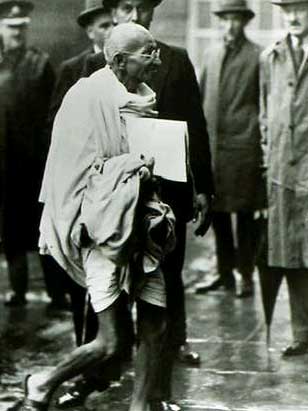
In a recent conversation on the topic with subjects from the population, I remember one of the words spoken by older people: the peace of mind comes from trancazo, with which they place as an example of the time that a single guard the internal order of those times with a wooden baton with which he threatened a person suspected of committing a crime, was responsible for ensuring and maintaining peace throughout a neighborhood or sector of the capital under their custody. Do not share the view that peace and order are imposed by force of violence, and examples can be cited dozens of facts just enough to recall the experience of Gandhi in their peaceful struggle, through which conquered India's independence from British colonialism, being consistent with his principle: "if you apply the proverbial eye for eye, will end all blind", ie, there is evidence that violence in all its manifestations known, generates violence.

Therefore, if there is widespread evidence that violence breeds violence (ie, the semantic definition of violence according to the Dictionary of the English Language "force exerted on a person to force her to do what you do not want, extreme strength, tenderness, pregnancy ", etc.), we will first cause the increase of this disease in Cuba in the form of de facto government that was established in the country since 1959, and has won political power in a violent way, which is result in a violent city in nature as a subject of that reporting relationship.

Violence also responds to a system of government where there is no real rule of law, in which the political will of the ruling class is called to protect the rights of individual citizens, but to stay with the status quo and maintain political power at the expense of people's suffering , suffering worsened in recent times by the economic crisis called "Special Period", crisis or no prospect of final output, which creates uncertainty, hopelessness, frustration and all kinds of discomfort that affects the human psyche, maladjusted and individuals generates psychopathic behavior and a kind of helplessness in the average citizen, which results in the search for mechanisms illegal and violent methods to solve the problems of coexistence, in the style of social relations in the remote past.

cause of violence is also bad education of generations of Cubans educated in the revolutionary process, which has achieved a high level of instruction supported by the rule of socialist morality (the double standard), the cult of people Maximum Leader and his closest followers loyal detriment of recognition of the value and respect for state institutions and the rule of law, despite the latter being formally recognized by the Constitution, in Article 66 - , the implacable hatred to the alleged North Enemy so-called enemies of the Revolution, which, far from engendering positive values, divide the Cuban family, primary cell of society. That level of instruction should not be confused with education, because you can either instruct, educate just who is a living gospel, as was noted at the time by the illustrious patriot José de la Luz y Caballero. That level of instruction is also based on the alleged social equality for all Cubans, "equality" in recent years as evidenced by the growing social gap between those with access to convertible currency or foreign, and those living in the so-called national currency obtained through the miserable salary fixed frozen or does not resolve the basic daily living, and receiving worker throughout his working life.

negatively affects the behavior of citizens in their relationship with the other members of society and promotes the increase of violence, "the lack of recognition and support from the government to the people's traditional cultural values, such as the holidays in late December, officially denied by the government of Castro in the '70s, now tinged by shortages and rising prices of goods to the population, the military environment, with operations increased military and ideological activity exercised by the Government through the basic means of communication, especially radio and television-saturated rhetoric and demagogic verbiage of the open forums, roundtables and other programs of the so-called Battle of Ideas (in which is not allowed defense of the opponent, so you have more than psychological abuse "Battle of Ideas"), the violent films and international news edited and manipulated on unpleasant and depressing events, including performing any Islamic fanatic or against a Jewish psychopath or an American.

The human society without faith facilitates the increase of violence, which harms the human being in general, the evangelizing work of the Church in Cuba is limited by the political will of the ruling class, which is declared to be an atheist government, although recognized in the constitutional field "religious freedom" in fact this is a real fallacy , since the role of the Church in the country is limited to work inside the temples and is not allowed or public demonstrations, and access to mass media controlled entirely by the government and charged the above abuse psychological.

Something similar also happens with much-needed Civil society institutions and other philanthropic organizations, prohibited por el gobierno, que justifica la existencia de una supuesta “Sociedad Civil”, controlando y manipulando las organizaciones que bajo el término ONG se permite organizar a favor de la política oficial.

A la lista de las causas del aumento de la violencia se suma la llamada Miopía de la Legalidad Socialista, evidenciada en la desproporcionada y voluminosa legislación penal vigente, integrada por la Ley No. 62 de 1987 (Código Penal), reformado en 1997 y 1999 con figuras delictivas propias del sistema de partido único y penas desproporcionadas para los transgresores de la Ley; la novedosa y antidemocrática Ley No. 88 de 1999 (Ley de Protección de la Independencia y la Economía de Cuba), conocida as the Gag Law, Law No. 72 of 1992 (Electoral Act), regulating the alleged wrongful acts of elections between candidates of the only party recognized and allowed the people to solve nothing, Act No. 93 of 2001 (against Acts of Terrorism), a term I prefer not to comment on this article, the Decree-Law No. 99 of 1987 (From Personal Offenses) and Decree No. 141 (Violations of Internal Order), virtually unknown to its lack of application.

The criminal law has, among its features, the intent of the legislature to protect the state and government interests at the expense of individual liberties of the citizen, she applied as the political will of the ruling class, and much of its contents remain a dead letter as standard, making it ineffective; example is imposing greater sentences for criminal acts against state security in crimes against the normal development of the family and sexual relations or crimes against life and bodily integrity. This situation is compounded by the lousy job in the prison system with the condemned, which in most cases become recidivists usual, challenging the criminal rehabilitation system "fairer world."

Cause of the increase in violence is the scourge of alcoholism and drug, which unfortunately is accompanied by a growing number of young people confused and saddened by the economic situation of material and spiritual misery that the Cuban population lives, evidenced, among other examples, in the shameful increase in prostitution - with the well-known prostitutes, who end their careers when they find an alien that makes it easier to leave the country, and uncontrolled migration to the capital, despite being formally regulated by Decree No. 317 of 1997-a legal instrument issued by the government to try to curb population growth in the country's capital, "which is applied by administrations and municipal-in short, does not solve the problem, the bad job of some officials in charge of the case.

Despite this unfavorable situation, I recognize that there is great human potential in our youth, and Cubans are people of peace, eager to live in freedom and prosperity, so I have faith in human betterment. I am sure that a better society is possible when our individual rights are respected, work becomes the means of satisfying the need and not a slave cargo, where everyone can do something useful as social needs and receive in return fair remuneration for their efforts, when we learn to live with the objective truth social premise, with practice and observance of democratic institutions as the foundation of the Cuban State and respect for others as the foundation of social relations, for all, all for the good of all.

a better Cuba is possible.

In memory of dead colleague.

* Register Vicente Casas (Havana, 1958): Self-taught. Technician Graduate in Law (1992) and Bachelor of Laws (University of Havana, 1998). Specialist in Housing. He has worked as such in municipal departments of the Cuban capital. He has served as consultant and legal adviser. Current member Agramontista. Reside in Havana.

Rhinitis More Condition_treatment

MAHATMA GANDHI, MARTIN LUTHER KING AND MORE

by Manuel Fernández Rocha *

Mahatma Gandhi was born in India in the second half of the nineteenth century, graduating as a lawyer in England and late went to South Africa, where spent twenty years fighting racial discrimination and segregation civil Indians who had migrated there as workers. As used methods of passive resistance struggle against the arbitrariness of political power and boycott, later perfected in India. Returned home in the second decade of the twentieth century, and from this date until his assassination in 1948 led the Congress Party of India and peaceful resistance and struggle for human rights, which gave independence to India after the Second World War.

Based on Gandhi, Martin Luther King Jr. against racial discrimination and civil rights of American blacks. Born in 1929 in the racist South, became pastor of the Baptist Church, and received the Nobel Peace Prize in 1968. Today, January 15, date of birth, is a national holiday in the U.S., civil rights are respected by law, and he is one of the great patriots of their country.

Both heroes and martyrs fought for rights that are now recognized in the Universal Declaration of Human Rights. Their struggle was long term, and was crowned with success. The rule of law English and American made gradually be fair to impose their ideas. In 1957, President Eisenhower, was ordered racial integration in schools in the U.S. South. Then he did the same in buses, bars and shops. Today civil rights are respected and are part of American law.

The question now would be to see the peaceful resistance in countries with totalitarian governments, where there is no rule of law and human rights are systematically violated, killed and is condemned for defending these rights universally accepted. In totalitarian states, the struggle is more difficult than in the India of Gandhi or the United States of Martin Luther King Jr. The people, without any legal support of a grip, if you choose to emigrate, can-massively, the struggle for civil rights and equality are facing an absolute rule, where there is no free press or independent work of the totalitarian state that encompasses everything. NGOs are not allowed to defend the interests of the exploited and excluded, there is no independent newspapers to denounce. Everything has to be with the State, nothing against him. The words of the Leader (all totalitarian state is caudillo) are law, and published and disseminated ad nauseam.

seems that all doors are closed, but it is not. The story has two recent examples of totalitarian states now free: Spain after 1975, and the Soviet Union after 1985.

Freedom is like air, when needed we will drown, but when we do not value. During the term of the Constitution of 40, foreigners visiting Cuba congratulated us and advised us to look our freedom, which was unknown, especially in Europe, but not care and will spend what everyone knows.

How long can we withstand totalitarianism! What to do? Peaceful struggle is long and painful. Is made for stoic and slaughtered. So were Gandhi and King. Cubans count on international solidarity, especially in the countries of Eastern Europe that were freed from the communist plague. They know perfectly well what is the "worker's paradise", and many countries (about twenty-five). There are also other countries of the world democratic majority. There are few totalitarian countries in the world, and even many steps are taken and developed thanks to a market economy, while the policy is totalitarian, it is a contradiction that sooner or later be solved by democracy. In this situation, independent journalists play a lead role reporting and teaching.

Solidarity also has to be internal, there is no preparation for democracy if there is no solidarity among the groups fighting totalitarianism. We must distinguish between tactics and strategy. The tactics may be different, and must be tolerated and supported by various opponents, the strategy remains the same: the democratization of the country. It is absurd division opponents for opinions tactics, this only does a disservice to the government reaction.

Both Gandhi and King used the boycott, which gave very good results: no goods were bought or used the reactionary government, not working for the operator. This is very difficult to do in totalitarian countries where everything is government-goods, labor, transportation, housing, land and so on, "but not impossible, as there is a small private sector to sell cheaper than the totalitarian state gives better services. But we must be stoic to forgo the goodies they sell the malls.

Finally, in the nonviolent struggle for human rights must be sacrificed. I remember that Gandhi was a vegetarian and family produced what it consumed. In Cuba it is not easy, but you can take steps to try to reduce the dependence we have omnipotent and omnipresent state. Both leaders

Pacific was the love between men as a guide. We have a Christian background who believes in love. Marti distinguished men among those who loved and created, and those who hated and destroyed. Let those who love and believe, avoid unnecessary hatred and pointless discussions. We have to win freedom, this takes pains and troubles, but the goal is noble and good. Gandhi and King are in the history of mankind. Their struggle is an example, but can not be applied dogmatically, as the world changes, expanding communications and human rights are known even by those who violate them.

The Universal Declaration of Human Rights must be known well by all Cubans, and required as a foundation of law and subsidiary legislation in any legal situation. This Declaration should be appendix to the Cuban constitution, it establishes the minimum rights of mankind.

* Manuel Fernández Rocha: Graduated from the University of Havana in racing history and law. Among the lawyers Agramontista living in Cuba is one of the oldest. He is founder and Chairman of the Forum for Historical Studies, and this condition has been attached to various projects opponents, such as Concilio Cubano, the Varela Project, the Initiative for the Fatherland for All and the Assembly to Promote Civil Society. Reside in Havana.